Rural rabbit management specialists.
Our imported R3 unit simultaneously eradicates rabbits and destroys burrows thereby removing habitat.
By reducing rabbit numbers we are helping restore good environmental and commercial land use.
There are nearly 300 million wild rabbits in Australia causing between $100 million and $200 million dollars in damage annually. Check out this Youtube video for a brief history on wild rabbits in Australia.
What we do
We offer a number of options for rabbit control including burrow implosion, fumigation and Pindone baiting. For more detail please read below.
Burrow implosion
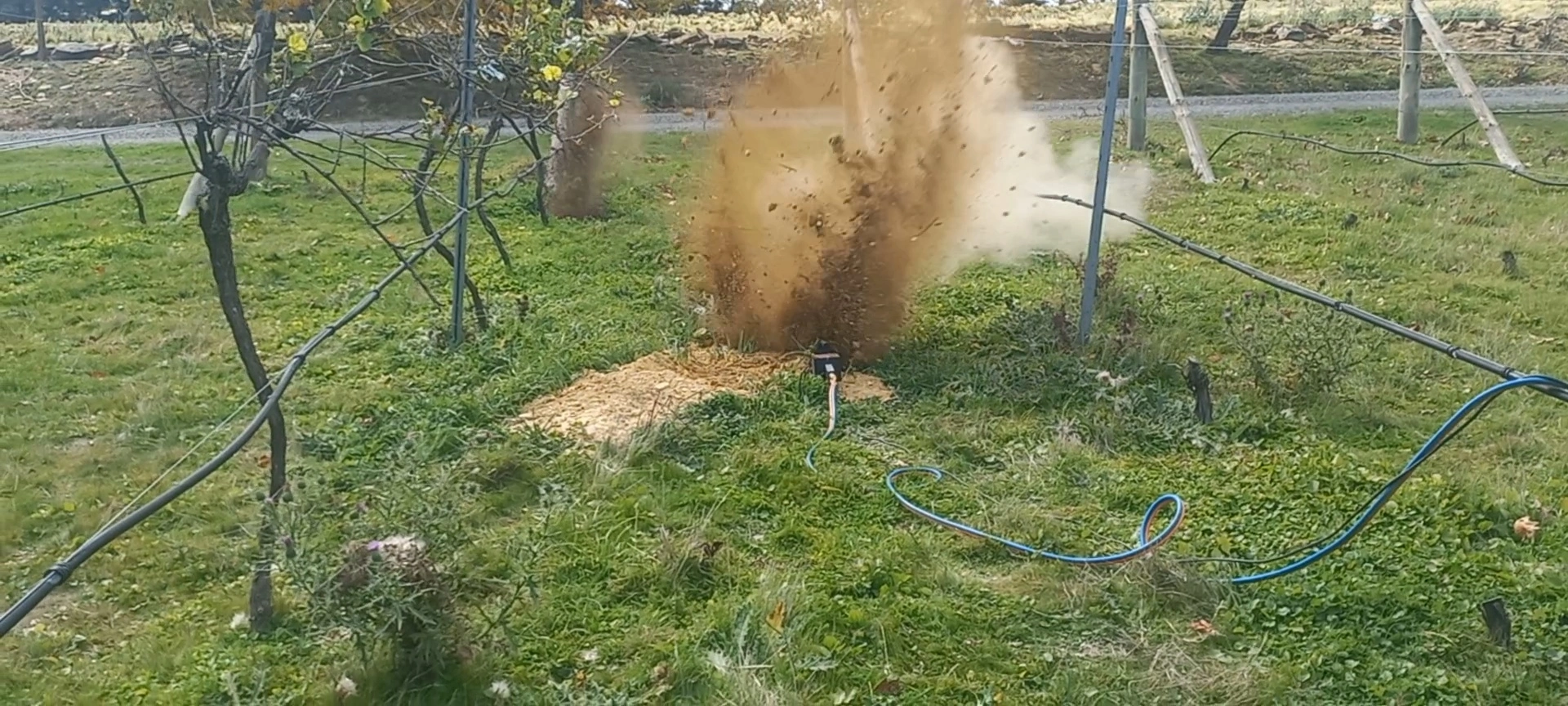
We have imported an R3 concussive force generator which feeds a mix of propane and oxygen gases into the borrows. When the desired amount of gas has been dispensed, determined by warren size, the gas is ignited remotely. This creates an underground explosion resulting in burrow implosion in most cases. The concussive force dispatches the rabbits quickly and humanely whilst the implosion removes habitat. This can reduce or remove the need for follow up earth works such as mechanical ripping thus reducing costs.
Fumigation
It's not possible to use our R3 concussive device in all situations. Under buildings, dam banks, etc. We do however have an option to use Phosphine gas fumigant. Firstly, we identify all of the entrances to a warren using the smoker. Then we insert an Aluminium Phosphide tablet approximately 1 meter into the hole, add a splash of water to activate it then back fill the entrance with soil to contain the gas which is released. The process is repeated until all of the holes are filled. Our operators wear appropriate PPE and anyone not wearing PPE is kept back 30m and up wind until the operation is done.
Pindone baiting
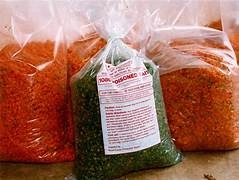
Not all rabbits live in burrows. Often they live above ground in what are known as "squats". They take cover in whatever available refuges that are about, including logs, tussocks, blackberries and even under farm junk like cars and sheet metal. One way to tackle the above ground rabbits is to lay out baits and we use carrots laced with Pindone. Baiting requires several days of free feeding to educate the rabbits to come to the feeding trails then 3 days of baiting 3 days apart. Not only is there work to lay out the baits, but any uneaten carrots have to be collected to avoid poisoning other animals. So the process can be involved and a little more expensive. However, it is another tool in the control of feral rabbits.
Visuals are always handy !
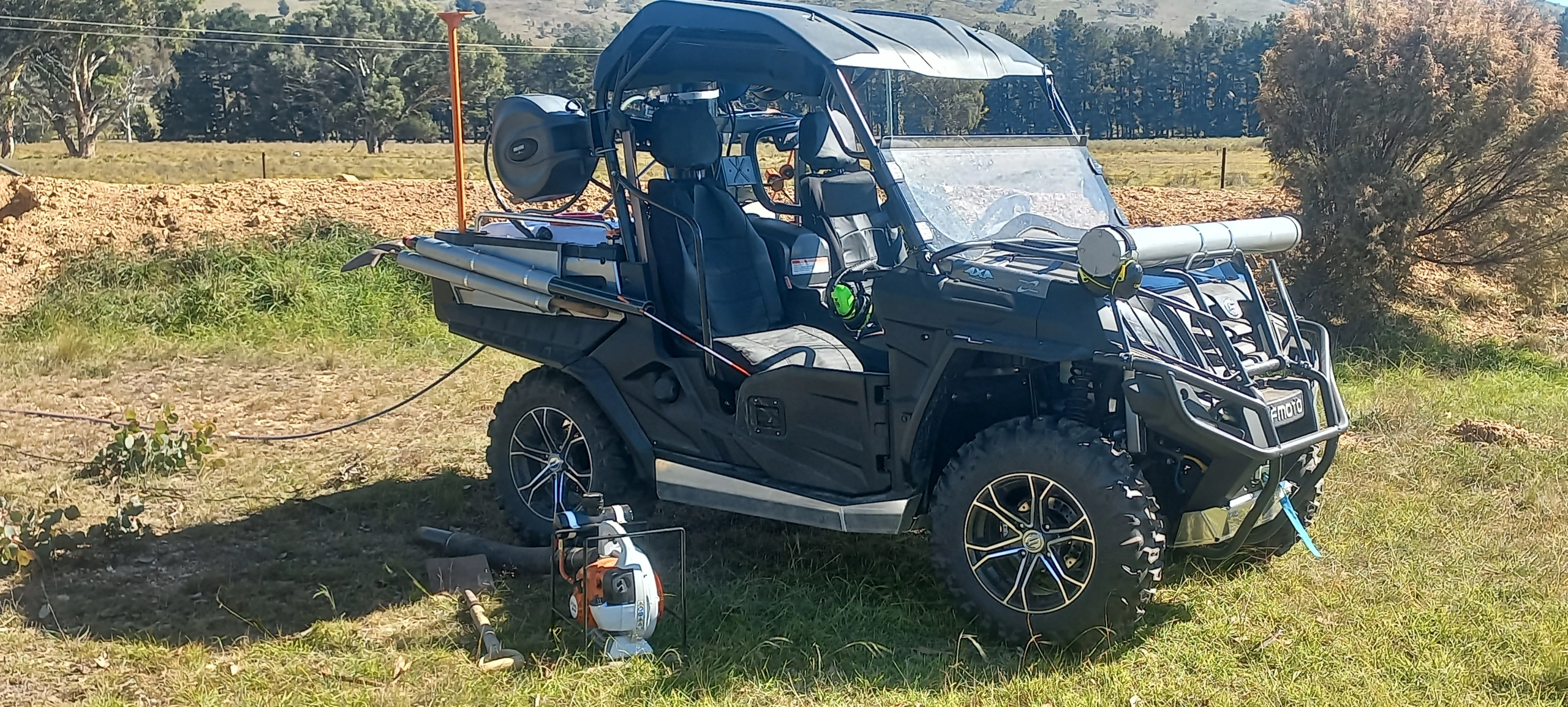
Equipment
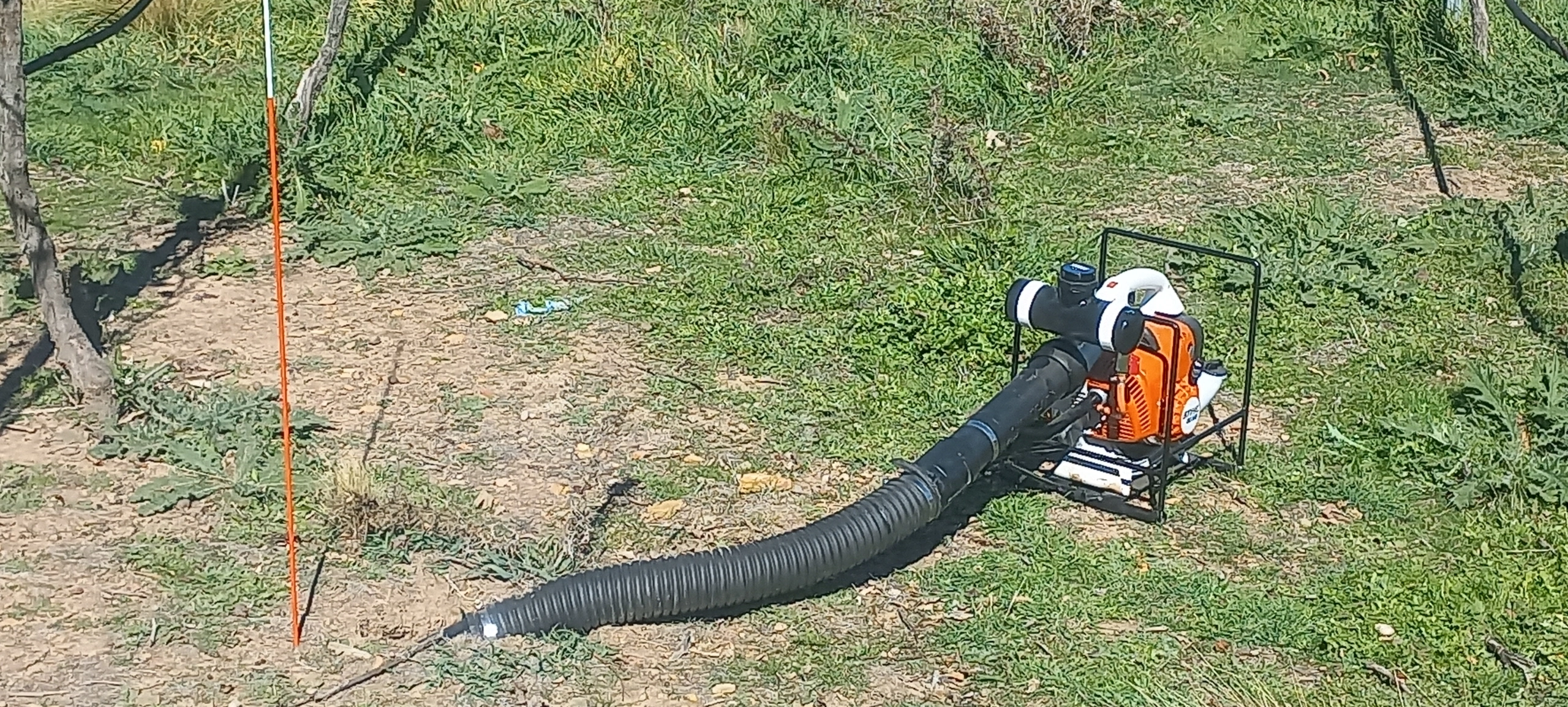
Here is a rundown on some of the gear we use.
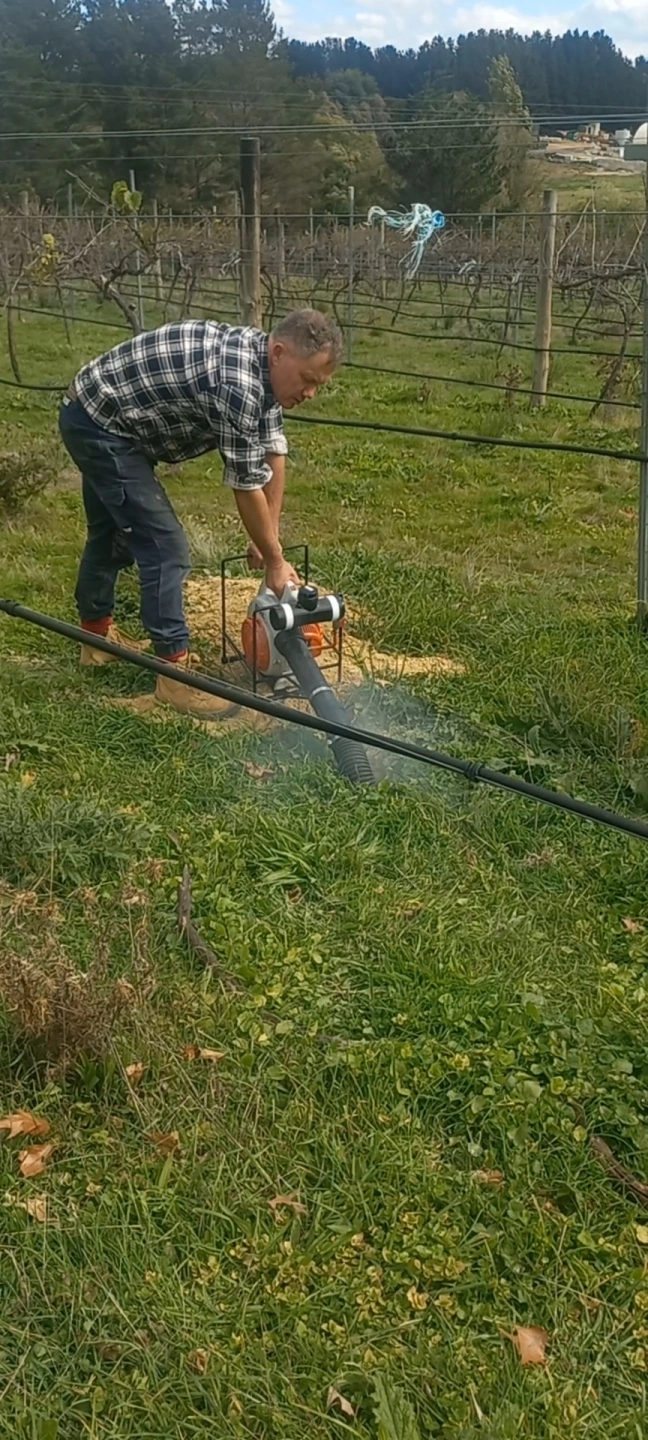
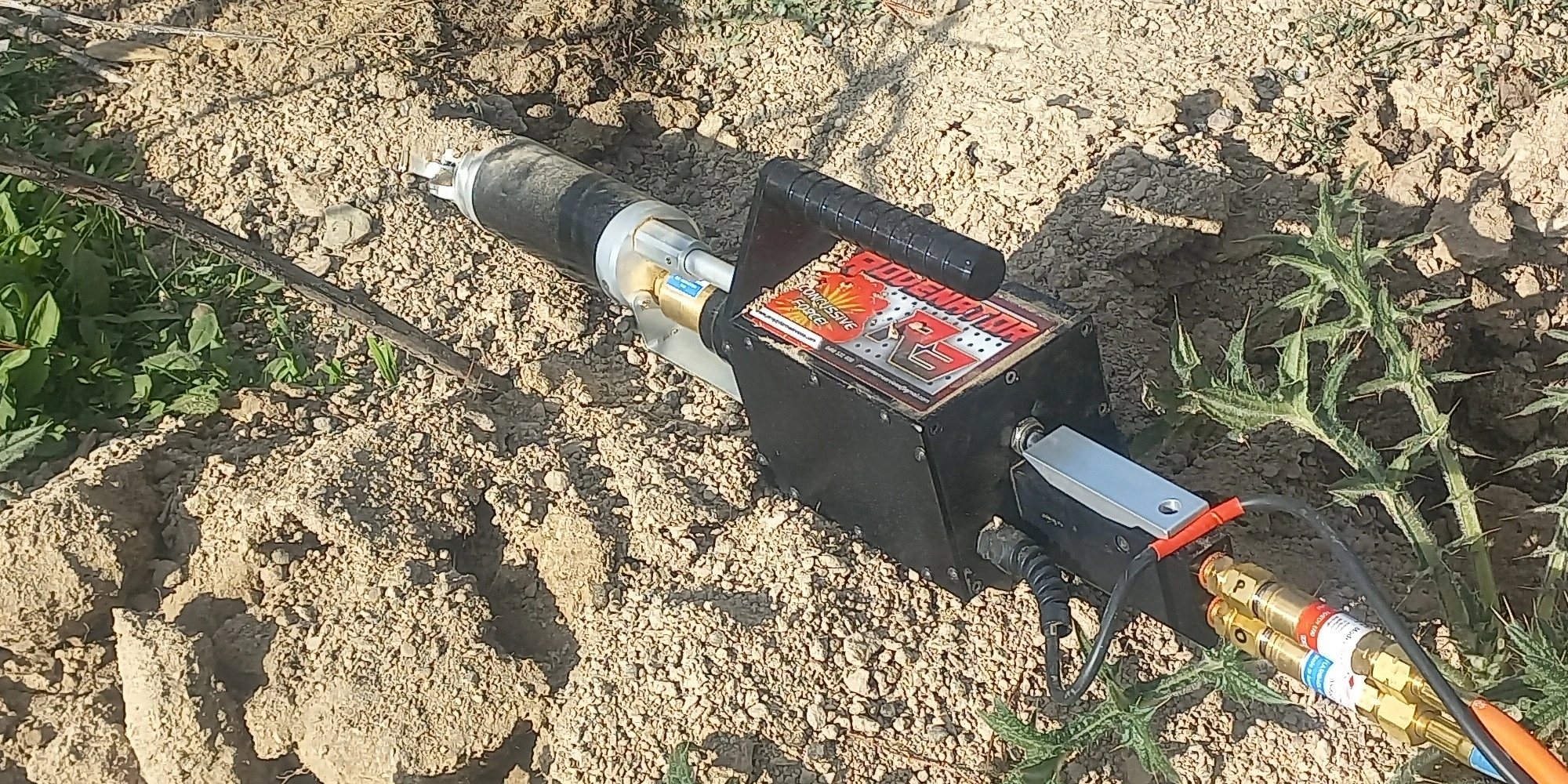
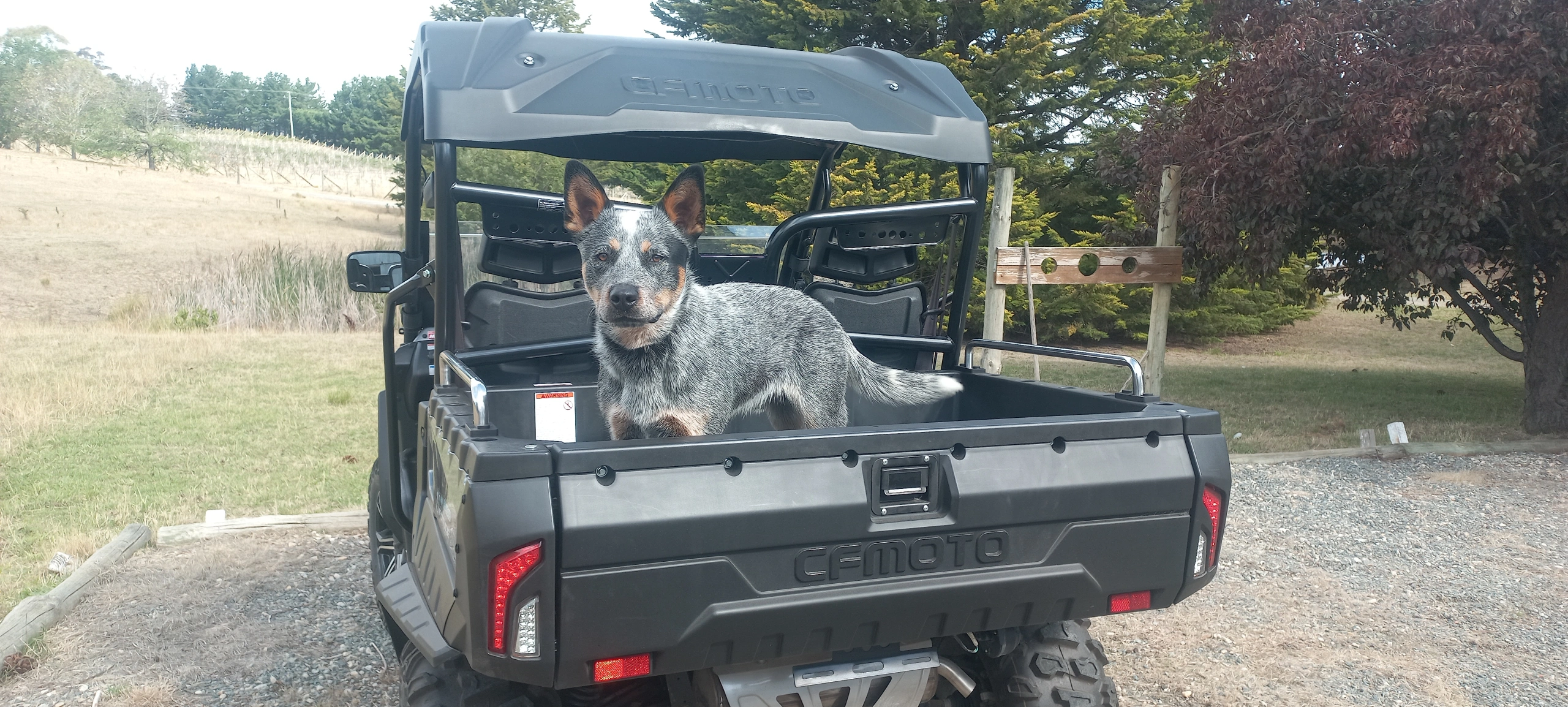
Warrens and rabbit damage
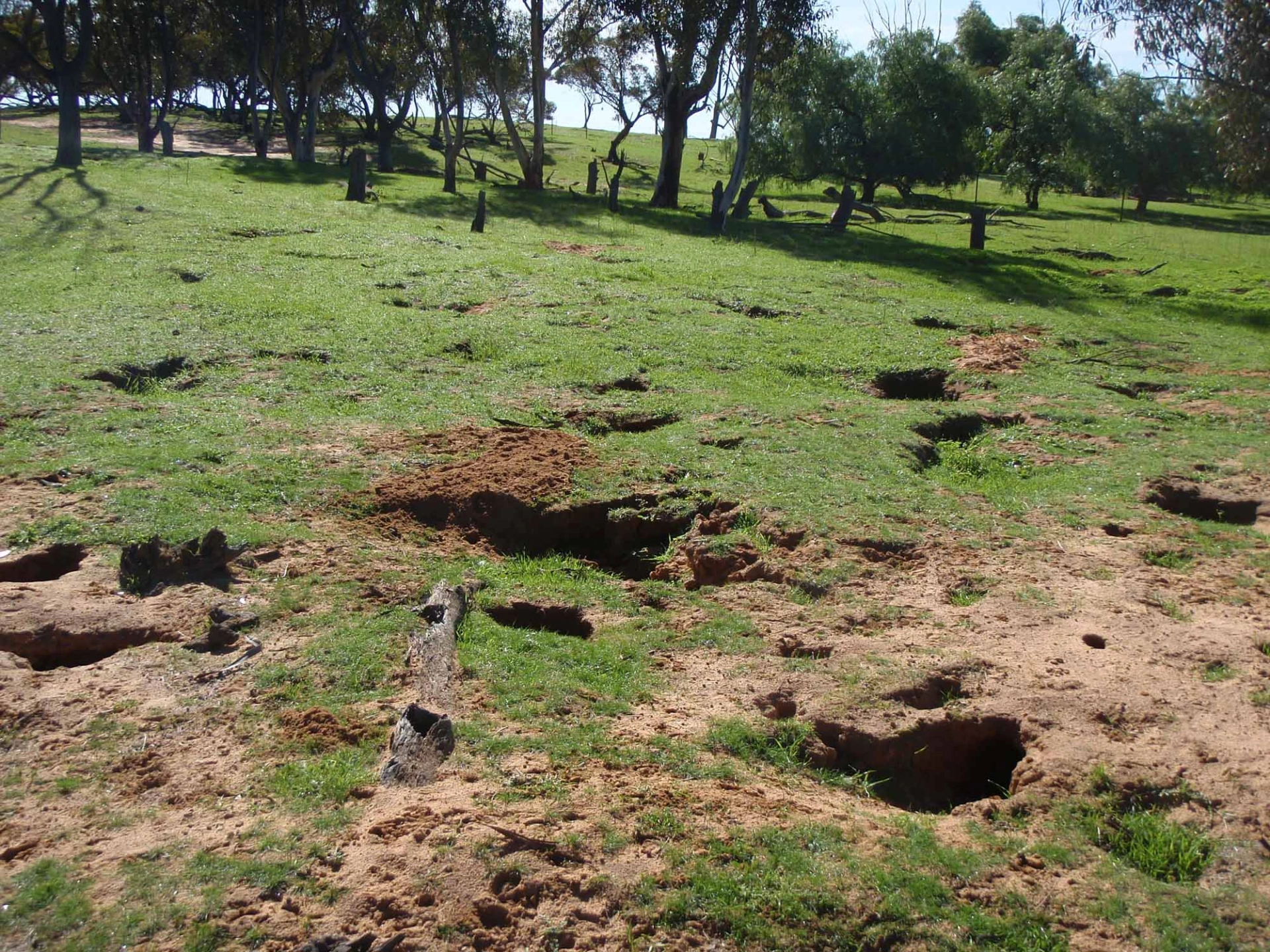
Rabbits cause millions of dollars worth of damage per year to agriculture and the environment. You may have some scenes like these on your place.
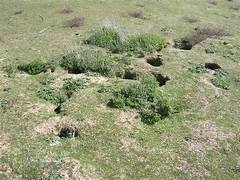
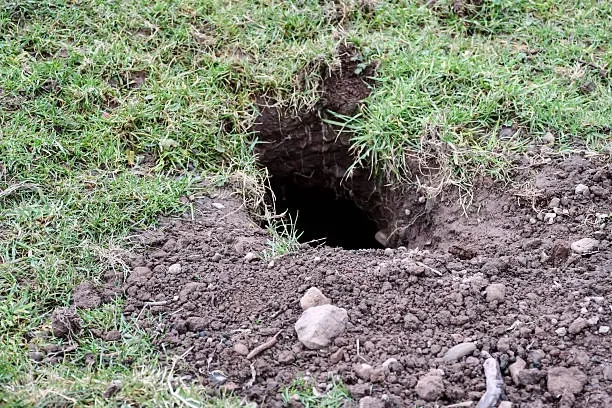
Here's a few things that are useful to know, including a price structure.
If your project is small, less than a days work, then for economic reasons (travel costs) we are best staying within an hour or so of Lake George. However, if you have a larger job or can group together a bunch of neighbours, then get in touch. We are happy to travel if we can make it work for all of us. Check the contact form for our location and see how far away we are from your property.
YES. If you have a larger property we are happy to come and discuss a strategy that works for you. Costs will depend on the scope of work and can be worked out on day rates or weekly rates, whatever we agree on.
The NSW DPI has produced SOP 09 to govern the use of the R3 unit. When used in accordance with these procedures the process has been assessed as the #2 most humane way to dispatch rabbits after a clean head shot.
If there are neighbours close by, they need to be notified prior to work starting. When the R3 is activated, it sounds much like a very loud shotgun going off. This can cause concern to unaware neighbours as well as horses, dogs etc. Also, for best results we ask you to identify your warrens. We can give you flags to mark them if you need. Owners know their own properties and are best placed to work out where the problems are. We can do this for you but may miss some burrows, not to mention the added cost of us just wandering around your place instead of getting on with the rabbit work. However, if you are time poor we will do whatever needs doing. Before we start work we will go over the process and develop a strategy for your property. If you have a lot of bunnies and are handy with a shovel you can help us. Both implosions and fumigations require the burrows to be filled in. This way we will get more done in the time we are there which will ultimately save you some money.
Below is an extract from the Pestsmart website. Check it out for further reading.
Competition and land degradation by rabbits is listed as a key threatening process in Australia4. Rabbits can cause damage by:
overgrazing native and sown pastures, leading to loss of plant biodiversity and reduced crop yields
competing with native animals and domestic livestock for food and shelter, increasing grazing pressure and lowering the land’s carrying capacity
building warrens, causing land degradation and erosion
preventing or inhibiting the regeneration of native shrubs and trees by grazing
increasing and spreading invasive weeds
acting as a food source for introduced predators, which can lead to increased lamb losses and disease prevalence, and a decrease in small mammal diversity.
All of these impacts eventually lead to higher management costs, loss of productivity and huge financial losses for Australia’s farmers, as well as other land managers (eg national parks).
Although biological controls (myxoma virus and rabbit haemorrhagic disease virus, or RHDV) have provided ongoing rabbit control for over 60 years with little cost, they have not eliminated the problem. The overall loss caused by rabbits to agriculture and horticulture in Australia was recently estimated to be about $217 million per year.
Management costs and loss of production
Rabbit damage and control costs at the property level vary depending on the land use or enterprise, climate and rainfall, and control methods used. The cost per rabbit also varies depending on the value of the affected commodity (eg crop type). For example, rabbit damage to high-value crops such as canola might be more financially devastating than damage to lower-value crops (eg lupins, barley), which generate lower returns per hectare. The return on investment in rabbit control is greater when high-value commodities or resources are protected from damage.
While the initial costs of rabbit control can be high (eg warren ripping costs are about $10–$20 per warren), the benefits can be long term. Often costs can be recouped by added livestock or crop production, or minimised by being shared among neighbouring properties using a coordinated approach. Taking no action against rabbits is likely to result in higher costs in terms of lost production and ongoing damage.
If you are on a smaller land holding commodity prices may not affect you. However, if you have a horse or two or some other animals then read on. 18 rabbits eat the same amount of feed as one grown sheep. They also like what horses, goats, pigs and cattle eat so every rabbit on your property is costing you money, especially if you are buying feed. The environmental damage they do can be even more obvious on a lifestyle block because you don't have to go far to see it.
Absolutely impossible sorry! Some rabbits will be above ground living in squats. Some may not be home when we visit their warren although we have a very keen blue heeler who runs around before we start work sending most rabbits to ground. Neighbours rabbits will probably jump the fence at some stage so always good to co-ordinate rabbit work across several properties. The R3 and fumigating is very effective but not 100%. The use of several strategies such as shooting and baiting after the R3 or fumigating is recommended to clean up. The R3 is also a very effective follow up tool after myxoma virus (MV) or Rabbit haemorrhagic disease virus (RHDV1 has been through. Finally, the best strategy is to reduce the numbers and then keep on them annually. Painful yes, but will yield the best results.
Costs will depend on the size of the job and location. For larger jobs and out of area locations we are happy to discuss options. The rates below are for our R3 implosion service and fumigations. Pindone baiting is quite different and requires multiple visits so a site assessment and plan will be needed. Costs can escalate quickly but definitely worth considering if multiple land managers join together.
1 Travel to site from our base in Lake George is $1.00/km. Involve your neighbours and we can split travel cost.
2 Up to 2hrs on site is $300.00
3 Between 2 and 4 hrs is $550.00
4 Between 4 and 6 hrs is $825.00
5 Between 6 and 8 hirs is $1000.00
6 If we need to send out notices to adjoining land holders and post warning signs add $80.00. This may apply to small blocks when neighbours are close. Call to discuss.
This is tricky to answer as there are a number of variables. 1kg of bait will cover approx 33 rabbits. The bait cost is a little over $30/kg so we can say approx $1.00 per rabbit. However, we require three treatments over a number of days so it's closer to $3.00 each rabbit. Baits are laid at dusk and checked the following morning along with carcass collection. Uneaten baits need collecting or burial. This all takes time and multiple site visits which adds to overall cost. Prior to all this we need to offer at least one but probably two or three free feeds (poison free) to educate the rabbits. Baiting programs need a site assessment to get a proper costing worked out, so please contact us.
The lead operator on every job has a Vertibrate Pesticide Induction Training certificate and an ACHNMON305 Operate Specialised Machinery and Equipment certificate. The latter relates specifically to the R3 unit.
Contact Us
Address
Doust Rd, Lake George NSW 2581, Australia
Phone
Shaun 0419 258 457ABN
40681637221